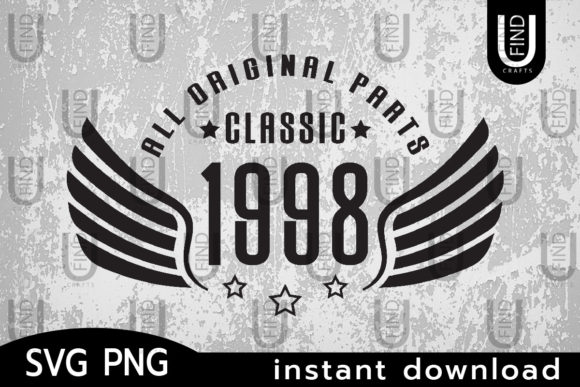
Classic 1998 All Original Parts
As an embroidery designer and product reviewer, I’ve seen my fair share of digital files that promise a lot but deliver little. Classic 1998 All Original Parts is one that carries a nostalgic vibe, with a retro aesthetic that could work well in the right context. But like any design, it needs to be evaluated for practical use before being incorporated into real projects.
The First Impression: A Nostalgic Design with Retro Flair
From the moment I opened the SVG and PNG files, the design exuded a vintage feel. The layout is clean, with a central focus that feels familiar—like something you might see on a classic t-shirt or a retro poster. The theme is straightforward: a celebration of 1998, with a visual personality that leans into simplicity and timelessness.
This design would naturally fit into projects that aim for a throwback look. Think custom apparel, baby items, or holiday gifts that evoke a sense of nostalgia. It’s not overly detailed, which makes it versatile, but also means it may not stand out on its own without thoughtful placement or color choices.
Real-Life Embroidery Use Cases
When considering where to use Classic 1998 All Original Parts, the design works best on larger, flat surfaces. A tote bag, sweatshirt, or apron would give the design enough space to breathe. It also has potential as an embroidered patch or a decorative element on a pillow cover or tea towel.
For small business owners or Etsy sellers, this could be a solid addition to a collection of vintage-themed products. However, it’s important to think about how the design will translate when stitched. The file size and complexity suggest it’s suitable for standard hoop sizes, but I’d recommend testing it on different fabrics before committing to a full project.
Where to Be Careful: Fabric and Design Limitations
While the design is simple, it’s not without its challenges. On textured or stretchy fabrics, the details may not come through as clearly. Thin or dark fabrics can also affect visibility, especially if the thread color doesn’t contrast well. For example, a light-colored design on a black fabric might look washed out unless the stitching is dense enough to make an impact.
Small hoop sizes are another consideration. If the design is too large for your machine’s hoop, it could lead to misalignment or uneven stitching. Additionally, the design may not be ideal for curved surfaces like caps or hats, where the shape could distort during the embroidery process.
Impact on Visual Appeal and Customer Perception
When used correctly, Classic 1998 All Original Parts can add a unique touch to handmade products. Its retro style can enhance the appeal of personalized gifts or custom apparel, making it a good choice for niche markets or themed collections. However, it’s not a one-size-fits-all solution.
Customers often respond positively to designs that feel authentic and well-crafted. This design has the potential to contribute to a professional-looking finished product, especially when paired with the right thread colors and stabilizers. It can also help build brand consistency for businesses that want to maintain a vintage aesthetic across their merchandise.
Practical Designer Notes for Real-World Use
Before using Classic 1998 All Original Parts in a commercial or personal project, I recommend doing a few key tests. First, try it on scrap fabric to see how the stitches look in action. Check the stitch density to ensure it’s appropriate for the fabric type you’re using. If the design is too dense, it might cause puckering or discomfort on certain materials.
Also, consider how the design looks in black and white mockups. This can help you understand how it will appear on different backgrounds. Test it on both light and dark fabrics to see how the thread color interacts with the surface. Using the right stabilizer is crucial, especially for delicate or stretchy fabrics.
Finally, always check the licensing terms before selling any finished products or digital files. Even though the design seems straightforward, it’s important to confirm that it’s suitable for commercial use and that there are no restrictions on how it can be applied.
Best Fit for Specific Projects
Classic 1998 All Original Parts is best suited for projects that emphasize simplicity and nostalgia. It works well as a tote bag design, a sweatshirt embroidery, or a baby item with a vintage flair. It could also be used as a holiday or wedding gift, especially if paired with complementary text or other design elements.
For craft businesses, this design could be a valuable addition to a line of printable mockups or digital product previews. However, it’s not ideal for intricate or highly detailed projects that require a lot of stitching or complex layering. If your goal is to create something that stands out, you may need to pair it with additional elements or adjust the design to suit your specific needs.
Final Thoughts: A Useful but Selective Design
Classic 1998 All Original Parts is a design that carries a clear visual identity and a retro charm that can be appealing in the right context. It’s not a high-detail or highly complex file, but that’s part of its appeal. It’s designed for simplicity, which makes it accessible for a wide range of embroidery projects.
However, it’s not a universal solution. Its effectiveness depends on how it’s used, what fabric it’s applied to, and how it’s presented to customers. As a designer, I’d recommend approaching it with a practical mindset—test it, adapt it, and use it where it fits naturally. With the right application, it can add value to handmade products, custom apparel, and boutique merchandise.